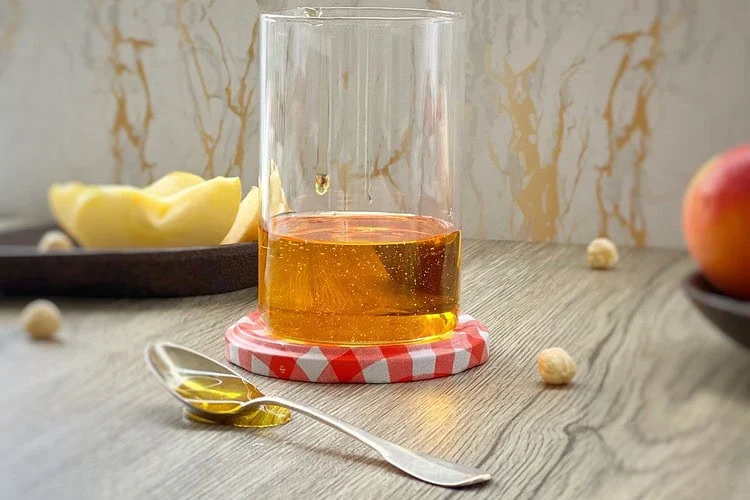
Accueil » Homemade Caramel Syrup That Stays Liquid
How to make homemade caramel syrupsyrup

Homemade Caramel Syrup That Stays Liquid

Want a homemade caramel syrup you can make ahead and keep ready to serve? That’s exactly what this recipe is for.

Made with just sugar, water, and a splash of vinegar or lemon juice (no cream, no butter), it stays fluid once cooled and pours easily over ice cream, pancakes, or flan. The method is simple, and I’ll walk you through it step by step.

If you’re in the mood for a richer, creamier caramel, try my salted butter caramel sauce.

PREP TIME

5 min

COOK TIME

10 min

DIFFICULTY

Easy

YIELD

About 1/2 cup

Start by adding the sugar, water, and white vinegar or lemon juice to a saucepan. Don’t stir. You don’t need to, and stirring can make the sugar crystallize.

The acid helps prevent that. I add the vinegar or lemon juice right at the start, before the mixture comes to a boil: it’s easier, and it protects the caramel from crystallizing from the very beginning.

The caramel stays very pale at first, then gradually starts to turn golden. From that point on, keep a close eye on it, because the color can change quickly. If it browns unevenly, just tilt the pan slightly or gently swirl it by the handle instead of stirring with a spoon.

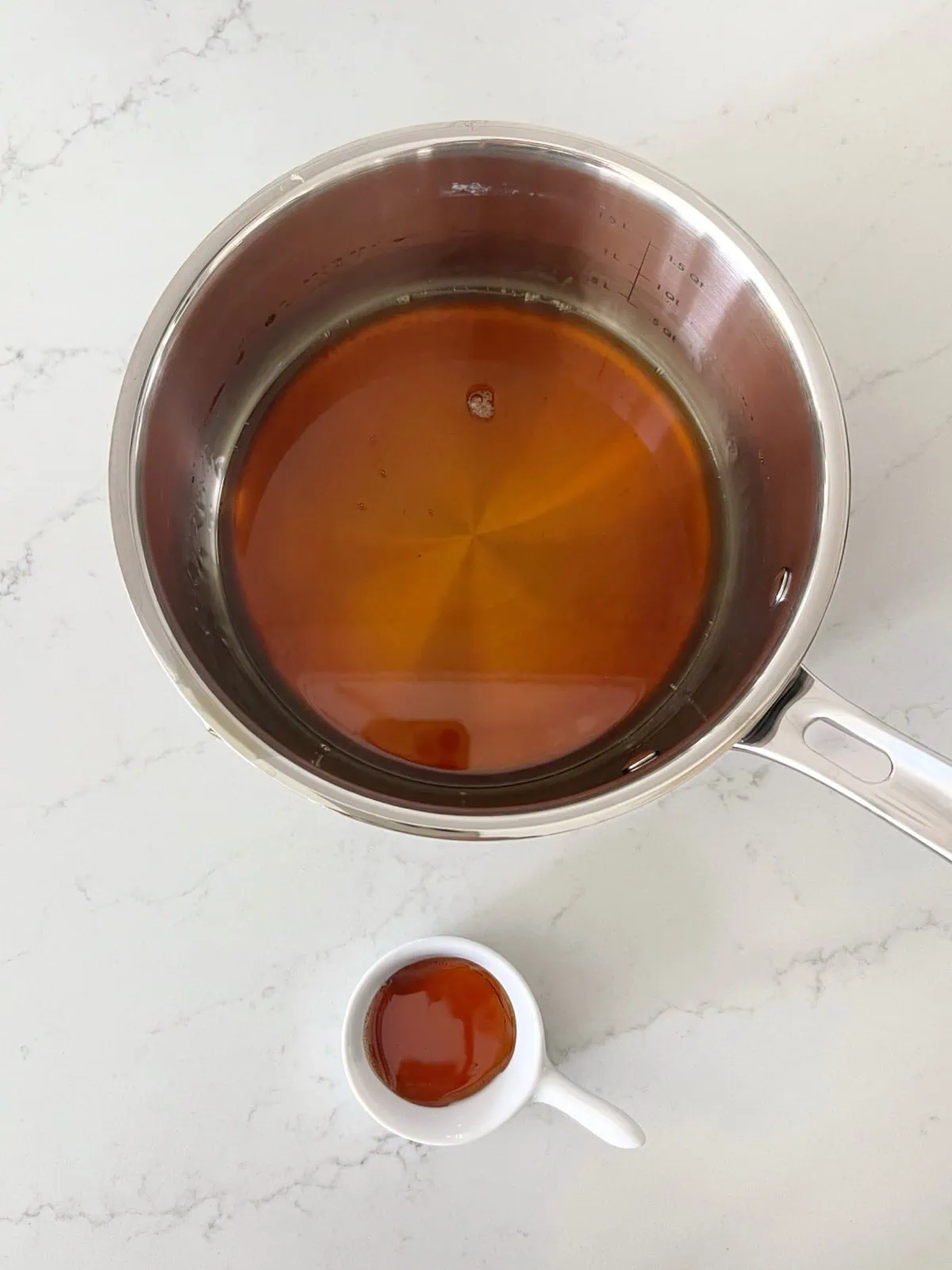
Take the pan off the heat as soon as the caramel reaches a golden to amber color. The longer it cooks, the darker and more bitter it gets.

Once the pan is off the heat, add the hot water right away: the caramel keeps cooking for a few moments from the heat of the pan.

What Color Should Caramel Be?

Three stages of caramel color: golden, amber, and overcooked

Color is your best guide. On the left, the caramel is still golden; in the center, it’s amber; on the right, it’s already too dark and will taste bitter.
Stop at golden for a sweeter caramel, or take it to amber for a deeper flavor.

Homemade caramel syrup that stays liquid

How to Make Caramel Stay Liquid

The amount of water you add at the end of cooking is what mostly determines the texture once the caramel cools, and it’s the key to keeping it from hardening. The more water you add, the thinner the syrup; a little less water gives you a thicker one.

Don’t judge the texture while the caramel is still hot. At that stage, it always looks much thinner than it will be once cooled. Let it cool completely before deciding whether the consistency is right for you.

I once ended up with caramel that set too hard, just because the water I’d heated in the microwave boiled too long. Some of it evaporated, so I actually added less than I thought. That’s why it’s best to measure the water after heating it, especially if it has boiled hard.

With the proportions in this recipe, you get a pourable caramel syrup that lightly coats a spoon at room temperature. In the fridge, it thickens a little but stays pourable.

Caramel syrup, the perfect topping for desserts

How to Fix Caramel That's Too Thick or Hardened

If your caramel turns out too thick once it cools, don’t worry: it’s usually very easy to fix.

Put it back in a saucepan and warm it gently. Then add a little hot water at a time, stirring until you get the consistency you want.

Take it slow: it’s always easier to add a bit more water than to cook down a caramel that has become too thin.

Hélène Thiers, founder of Minute Papillote

Did you enjoy this recipe?

4.9 from 18 votes

Click the stars to rate it.

Thank you for your rating: it helps more people discover Minute Papillote.

Homemade Caramel Syrup

Recipe by Hélène Thiers
4.9 from 18 votes

A simple homemade caramel syrup with no cream and no butter that stays pourable after cooling. Easy to make ahead and perfect for drizzling over ice cream, pancakes, flan, and other desserts.

Course: Dessert, BrunchCuisine: FrenchDifficulty: Easy
Servings

8

servings
Prep time

5

minutes
Cooking time

10

minutes
Cook mode

Turn this on to keep your screen awake while you cook.

Ingrédients

  • 3/4 cup granulated sugar

  • 2 tablespoons water, for the beginning of cooking

  • 1 tablespoon white vinegar (or lemon juice)

  • 3 1/2 tablespoons water, heated and added at the end of cooking

Instructions

  • Heat the water:
    Heat the 50 g (about 3 1/2 tablespoons) of water in a small saucepan or kettle and keep it hot for the end of the recipe.
  • Start the caramel:
    Add the sugar, the 30 g (2 tablespoons) of water, and the white vinegar or lemon juice to a saucepan. Cook over medium to medium-high heat without stirring.
  • Watch the color:
    Let it cook until the caramel starts to turn golden. If it's browning unevenly, gently swirl the pan by the handle. Don't stir with a spoon.
  • Stop the cooking:
    Take the pan off the heat when the caramel reaches a golden to amber color, depending on how deep you like the flavor. Move straight on to the next step, because the caramel keeps cooking for a few moments even off the heat.
  • Add the hot water:
    Carefully pour in the hot water a little at a time. The caramel will bubble up vigorously and may splatter, so protect your hands.
  • Stir the caramel:
    Stir gently with a spoon until the caramel is smooth. At this point, it's fine to use a spoon. If any bits of caramel seize up when the water goes in, return the pan to low heat for a moment and stir until they dissolve.
  • Transfer to a jar:
    Pour the hot caramel syrup into a clean jar at room temperature. Let it cool completely before judging its final consistency.
Notes / Minute Papillote Tip

  • Store this caramel syrup in a clean, tightly sealed jar in the refrigerator. I sometimes double the recipe so I always have some on hand.

Frequently Asked Questions About Homemade Caramel Syrup

Why Did My Caramel Crystallize?

Crystallization happens when sugar crystals start to re-form during cooking. To reduce the risk, add the white vinegar or lemon juice at the very beginning, with the sugar and water, and avoid stirring while the caramel cooks. If needed, just gently swirl the pan by the handle.

Yes. White vinegar and lemon juice do the same job here: their acidity helps keep the sugar from crystallizing.

Caramel turns bitter when it’s overcooked. Once it starts to turn golden, watch it closely and take it off the heat when it reaches an amber or light amber color.

As mentioned above, it keeps cooking for a few moments off the heat, so add the hot water right away.

Store caramel syrup in a clean, airtight jar, preferably in the fridge.

It may thicken slightly when chilled. If so, let it sit at room temperature for a few minutes or warm it very gently before using.

More Recipes to Try

The recipes featured here are gradually being translated and adapted into English. In the meantime, you can still visit the French versions if you’d like.

Salted butter caramel sauce, simple and delicious

Salted Caramel Sauce

A richer, creamier caramel for crêpes, ice cream, and desserts... or straight from the spoon!

Homemade hazelnut praline, a pantry staple worth keeping on hand

Homemade Hazelnut Praline

A deeply nutty blend of hazelnuts, almonds, and caramel for all kinds of treats.

Quick and easy chocolate praline pudding cups

Chocolate Praline Pudding Cups

Quick, creamy individual desserts made with chocolate and praline.

Orange salad with spiced caramel, a light and refreshing dessert

Orange Salad with Spiced Caramel

Fresh oranges with a lightly spiced caramel, for a light and refreshing end to a meal.

Leave a Comment

Your email address will not be published. Required fields are marked *

*

This site uses Akismet to reduce spam. Learn how your comment data is processed.