
Home » Creamy Japanese Corn Soup
Creamy corn soup served in a bowl with fresh herbs

Creamy Japanese Corn Soup

Japanese corn soup was one of my favorite food discoveries on my travels in Japan, where it’s a real classic.

Don’t expect a bold corn flavor or typical Japanese ingredients like miso or dashi. This soup is mild and delicate, which is exactly why it’s so easy to love, kids included.

It’s also quick and inexpensive to make. You only need a handful of simple ingredients, and frozen or canned corn works perfectly.

Published August 31, 2026

4.9 from 43 votes

PREP TIME

5 min

COOK TIME

15 min

DIFFICULTY

Easy

STORAGE

3 days

In Japan, this soup is known as corn potage. It’s especially popular in Hokkaido, in the north of the country, a region famous for its farming, and above all for its corn and dairy.

Corn soup is such a staple across the country that you can even buy it hot, in a can, from vending machines. That little quirk always made me smile: you grab your soup the same way you’d grab a coffee or a cup of tea.

That’s the memory I want to share with you here: a mild, comforting soup you’ll love as much for its velvety texture as for its simplicity.

The best part? Despite its Japanese roots, it doesn’t call for anything hard to find. All you need is corn, an onion, water, and, if you like, a splash of milk or cream.

A milder corn flavor than you might expect

With a name like “corn soup,” you might expect a bold corn flavor. This one is actually pretty mild. You can definitely taste the corn, but it never takes over. If that surprises you after the first spoonful, don’t worry. Your soup isn’t missing a thing. The onion and seasoning add just enough depth.

Half a bouillon cube adds a little extra flavor, but go easy on the seasoning. Bouillon, salt, and pepper can quickly overpower such a delicate soup.

Taste the soup once you’ve added the milk and cream (if using), then adjust the seasoning.

Are two ingredients really enough?

Corn and onion are the heart of this soup. On their own, they’re already enough to make it smooth and creamy.

I usually reach for frozen corn, since I always have a bag in the freezer. Canned corn works just as well. Just drain it and use the same amount (14 oz of kernels). You can also replace some of the water with the liquid from the can if it isn’t too salty, then hold off on salting until the end.

The onion should stay in the background. Cook it gently until it becomes soft and translucent, without letting it brown. It gives the soup body without really standing out.

With just those two ingredients, a little butter or oil, and some water, the soup is ready to blend. Milk, cream, and bouillon aren’t essential, but I find they make a real difference. The milk and cream add creaminess, and the bouillon rounds out the flavor.

Do you need to add milk and cream to Japanese corn soup?

Making it with just the cooking water works fine. I find it a little less satisfying, though: it isn’t as rich, and the texture isn’t quite as velvety.

Milk loosens the soup and thins it a little, while cream gives it more richness and body. For a lighter soup, stick with milk. For a creamier one, use a little of both.

There’s no one right amount. It all depends on how thick you like your soup. The first time, start with ¼ cup each of milk and cream, as in the recipe. Next time, you’ll know exactly how to adjust it to your taste.

I mostly use heavy cream because it’s the easiest to find here in the US. Crème fraîche also works well and blends easily into the hot soup. It adds a slight tang, while heavy cream keeps the flavor more neutral. Use whichever one you already have in the fridge. There’s no need to make a special trip to the store for a few spoonfuls of cream.

Add the milk and cream a little at a time, stirring and tasting before you pour in more. Stop as soon as the soup is as creamy as you like.

Creamy Japanese corn soup in a bowl, topped with corn kernels and chives

How do you get a silky-smooth texture?

Even after blending for a while, you may still notice tiny pieces of corn skin. That’s perfectly normal.

On a busy weeknight, feel free to stop right after blending. The soup will be a little thicker and more rustic, but just as good.

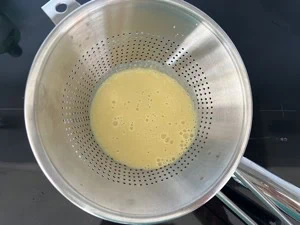
For an extra-smooth texture, strain the soup through a fine-mesh sieve. Set it over a bowl or another saucepan, pour in the soup, then gently press it through with the back of a ladle. A chinois (a fine conical strainer) works well too.

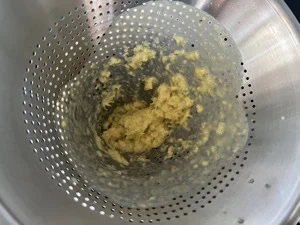
Don’t be surprised by how much is left in the sieve. It’s mostly the thin skins from the corn kernels that the blender couldn’t break down. Once strained, the soup becomes thinner, smoother, and almost silky.

This step only takes a few extra minutes, and it’s entirely optional. I do it when I want a really smooth soup and skip it when I’m short on time.

Hélène Thiers

Made It, or Tempted?

4.9 from 43 votes

I’d love to hear what you think!
Just click the stars above to rate the recipe.

It only takes a second, and it helps other home cooks find recipes they’ll love.

Easy Japanese Corn Soup

Recipe by Hélène Thiers
4.9 from 43 votes

This Japanese corn soup is mild and silky, made with just a few everyday ingredients. Add the milk and cream a little at a time, and strain the soup through a fine-mesh sieve if you like it extra smooth.

Course: Dinner, SoupsCuisine: French, JapaneseDifficulty: Easy
Servings: 4

4

servings
Prep time

5

minutes
Cook time

15

minutes
Cook mode

Pour garder la recette visible pendant que je cuisine

Ingredients

  • 14 oz 400 g frozen or canned corn kernels (about 2¾ cups), drained if canned (save the liquid)

  • 1 1 medium white onion, thinly sliced

  • 1 tbsp 1 tbsp butter or oil

  • water, just enough to barely cover the corn

  • 1/2 1/2 vegetable or chicken bouillon cube (optional; use a gluten-free one if needed)

  • 1/4 cup 60 g milk, plus more as needed

  • 1/4 cup 60 g heavy cream, plus more to taste

  • salt and pepper, to taste

  • chopped fresh herbs, for serving (optional): chives, green onions, or parsley

Instructions

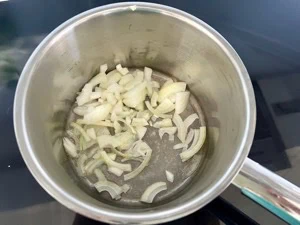
  • Soften the onion
    Heat the butter or oil in a saucepan. Add the onion and cook over low heat until soft and translucent, without letting it brown.
    Sliced white onion softening in a saucepan
  • Add the corn
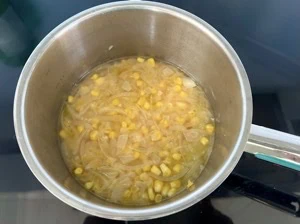
    Add the corn, straight from the freezer or drained if canned. Pour in just enough water to barely cover the corn. Add the bouillon cube, if using, and season lightly with salt only if needed. If you’re using some of the liquid from the can, taste before adding any salt.
    Corn kernels and softened onion barely covered with water in a saucepan
  • Simmer
    Bring to a simmer, then cover and cook for about 10 minutes, until the onion is completely tender. With fresh corn, cook a little longer, until the kernels are very tender.
  • Blend the soup
    Set aside a few corn kernels for serving. Blend the rest of the soup for a good minute or two, until it’s as smooth as you can get it.
  • Strain (optional)
    For an extra-smooth soup, pour it through a fine-mesh sieve, pressing with the back of a ladle to push through as much soup as you can.Blended corn soup being strained through a chinoisCorn skins left in the chinois after straining
  • Adjust the texture
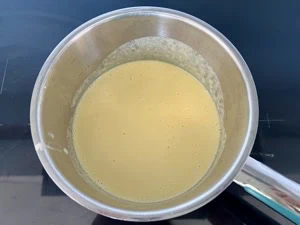
    Return the soup to the saucepan. Gradually add the milk, then the cream, until you reach the consistency you like. Reheat gently over low heat for a few minutes, without letting it boil. Smooth strained corn soup back in the saucepan, ready to reheat
  • Season and serve
    Taste and adjust the seasoning with salt and a little pepper, if you like. Ladle into bowls and top with the reserved corn kernels and a sprinkle of fresh herbs.
Minute Papillote's tip

  • I sometimes double the recipe so I have leftovers for the next day. This corn soup reheats beautifully over low heat.

Frequently Asked Questions

Can you make this soup with fresh corn on the cob?

Yes. Stand each ear upright and slice off the kernels with a sharp knife, staying close to the cob without cutting into it, since it’s tough and fibrous.

You’ll need about 14 oz of kernels (roughly 2¾ cups, from 4 or 5 ears). Then follow the same method as for frozen corn, letting it cook a little longer, until the kernels are very tender, before blending.

Yes, sour cream works well. Since it’s thicker and tangier than heavy cream, start with a little less, then adjust to taste and to the consistency you like. Stir it in over very low heat and don’t let the soup boil, so it doesn’t curdle.

Add a little milk or hot water, a few tablespoons at a time, stirring well after each addition. You may need less than you think.

Yes. Let it cool, then refrigerate it in a covered container within 2 hours of cooking. It keeps for up to 3 days. Reheat gently over low heat, adding a splash of milk if it has thickened.

More soups for every season

Depending on the season and my mood, I go back and forth between smooth, creamy soups and fresher, more fragrant ones. Here are four more to enjoy all year long. They’re in French for now, but English versions are coming soon!

Hot or cold zucchini basil soup served in a bowl

Zucchini Basil Soup

A light vegetable soup with the fresh, fragrant flavor of basil.

Carrot ginger soup in a bowl, finished with a spiral of cream and cilantro leaves

Carrot Ginger Soup

The natural sweetness of carrots, with just enough ginger to brighten it up.

Cold pea soup with mint and toasted hazelnuts served in a glass

Cold Pea Soup

A fresh, vibrant soup topped with the crunch of toasted hazelnuts.

Creamy Parmesan soup served in a bowl with croutons

Parmesan Soup

A rich, creamy soup for a cozy family dinner or an elegant first course.

Leave a Comment

Your email address will not be published. Required fields are marked *

*

This site uses Akismet to reduce spam. Learn how your comment data is processed.