Home » Miso Eggplant Recipe (Nasu Dengaku)
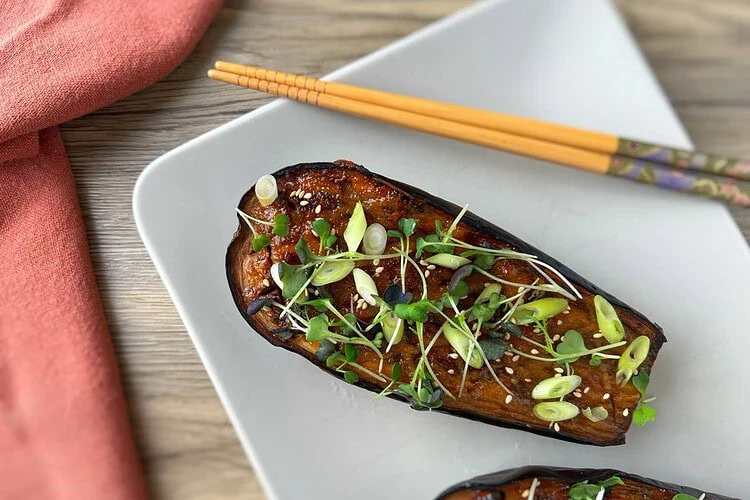
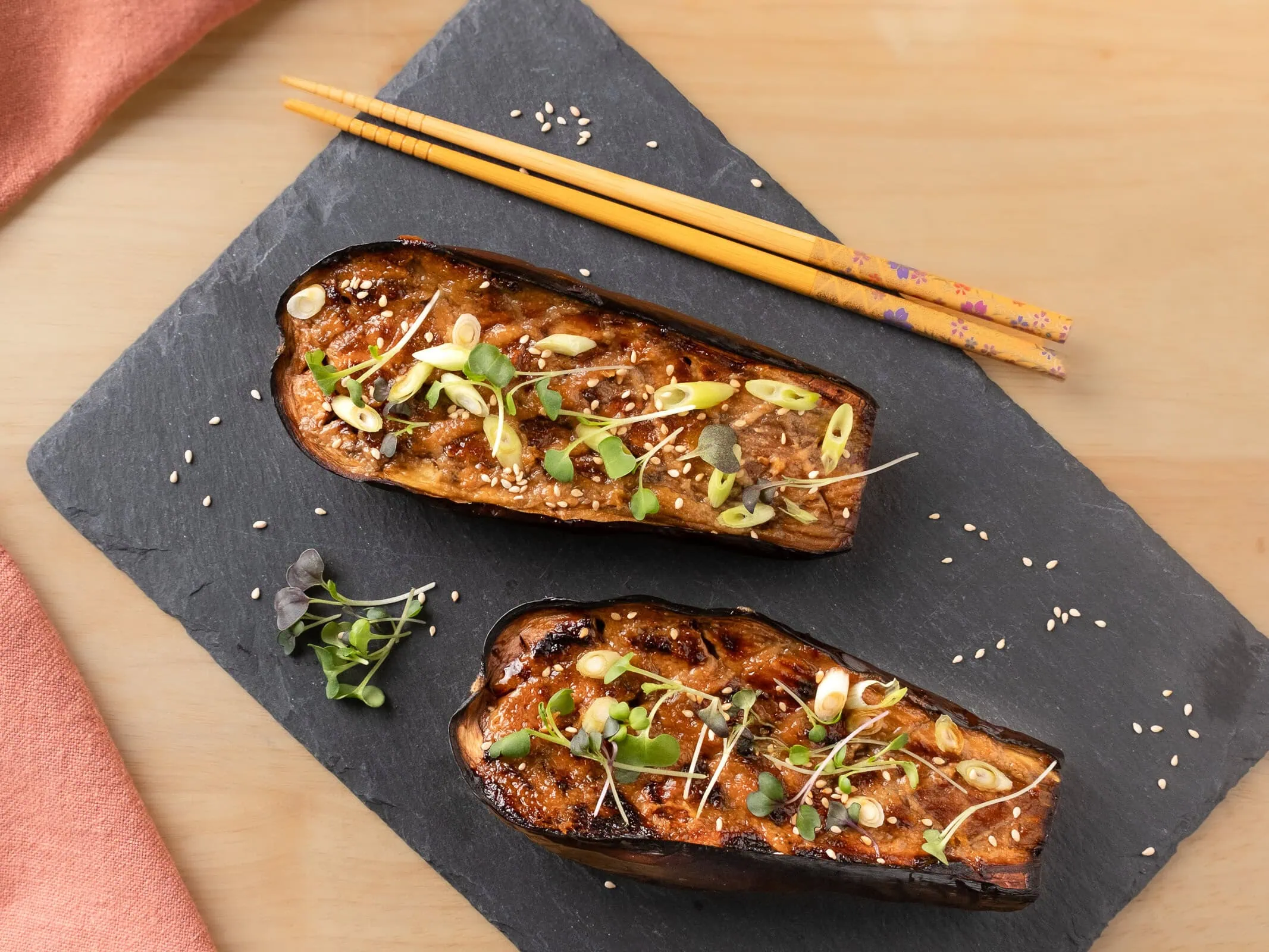
Miso glazed eggplant topped with scallions, microgreens, and sesame seeds, with chopsticks

Miso Eggplant Recipe (Nasu Dengaku)

Break through the sticky, caramelized glaze of this miso glazed eggplant and the flesh underneath is soft, silky, and almost creamy. Sweet, salty, and deeply savory, it’s hard to stop at one half.

This Japanese miso eggplant also happens to need very little oil and very little prep. A light brushing of oil is all it takes to roast the eggplant until it’s tender through and through. Then you spread on a miso and mirin glaze and slide the dish under the broiler just long enough to brown the top.

I’ve picked up flavors all over the world, and yet my first taste of this dish came in Versailles, France. It was on a restaurant menu as an entrée, which in French means a starter, not the main course. I was curious, ordered it, and loved it. Back in Singapore, I wanted to make it myself, so I did some reading, tested a few versions, and landed on a simple one I’m really happy with. Today I make it in Texas, where every ingredient is easy to track down.

The eggplants spend about 45 minutes in the oven, and that time is entirely yours. Put the rest of the meal together, tackle something else, or even sit down and rest for a bit. A couple of minutes under the broiler at the end is all that’s left. With white rice or a green salad, it makes an easy weeknight dinner.

Published October 23, 2026

Nasu dengaku is eggplant (nasu in Japanese) topped with a lightly sweetened miso paste, then broiled until caramelized. This nasu dengaku recipe keeps the glaze to three ingredients:

  • White miso: a fermented paste that adds saltiness and umami.
  • Mirin: a sweet Japanese rice seasoning used in cooking.
  • Brown sugar: helps the glaze caramelize under the broiler. White sugar works too.

You’ll find these Japanese pantry staples in my Ottolenghi-style miso onions and in my tsukune, Japanese chicken meatballs (both recipes are in French for now, so consider it a good excuse to practice!).

Miso Eggplant, Step by Step in Photos

From grocery bag to dinner plate in five steps.

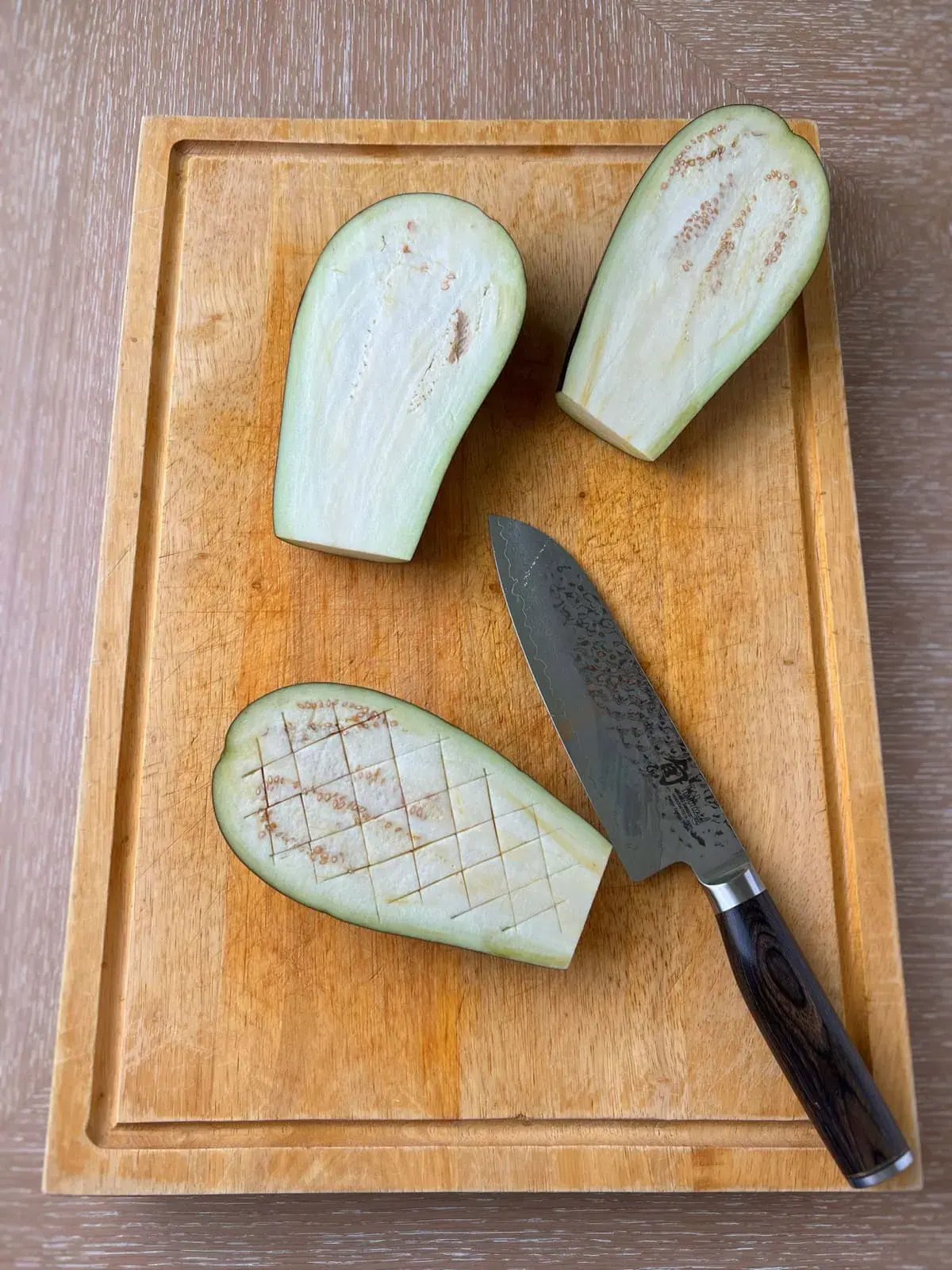
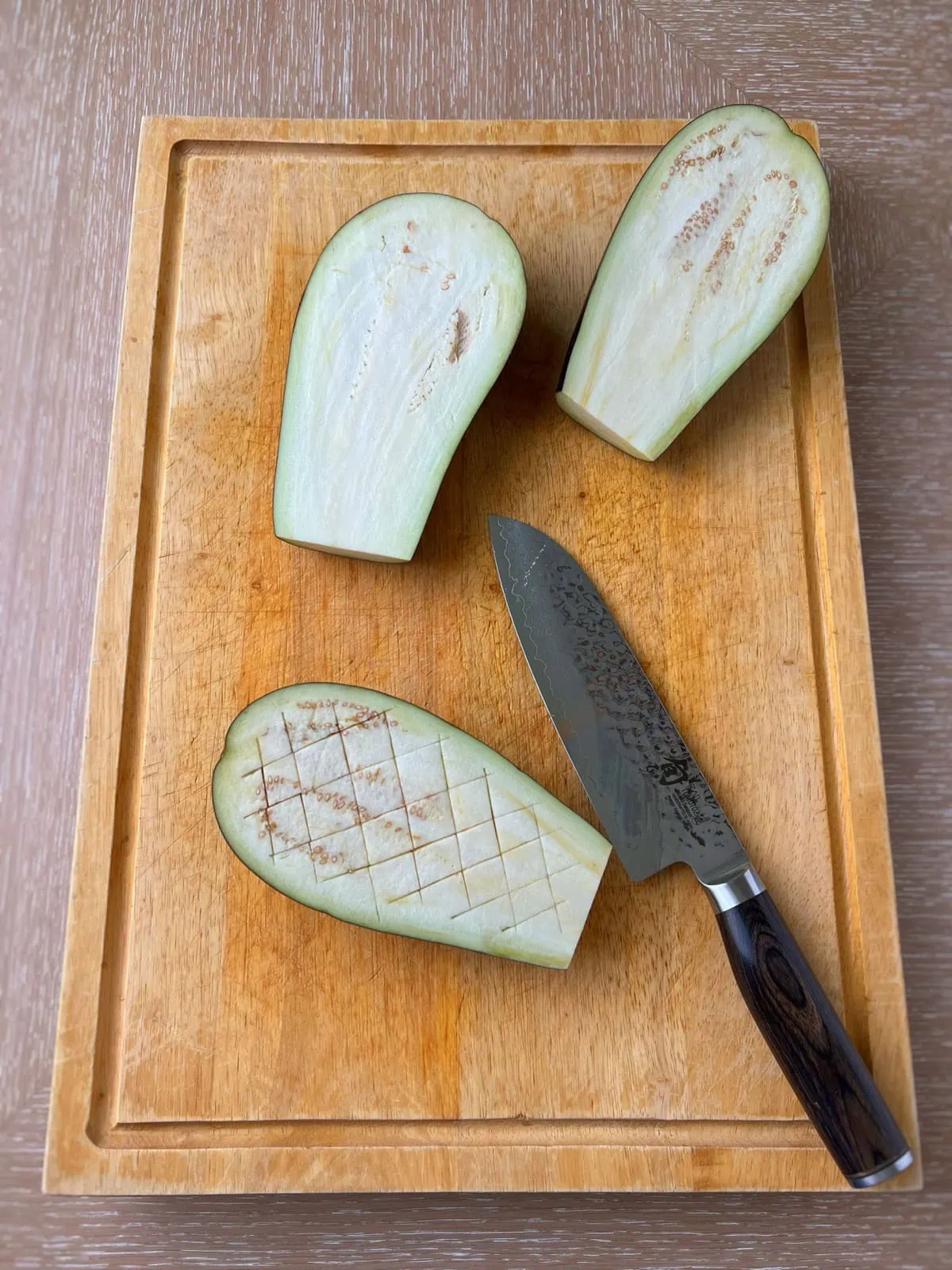
Eggplant halves scored in a crosshatch pattern on a wooden board, next to a knife
Score
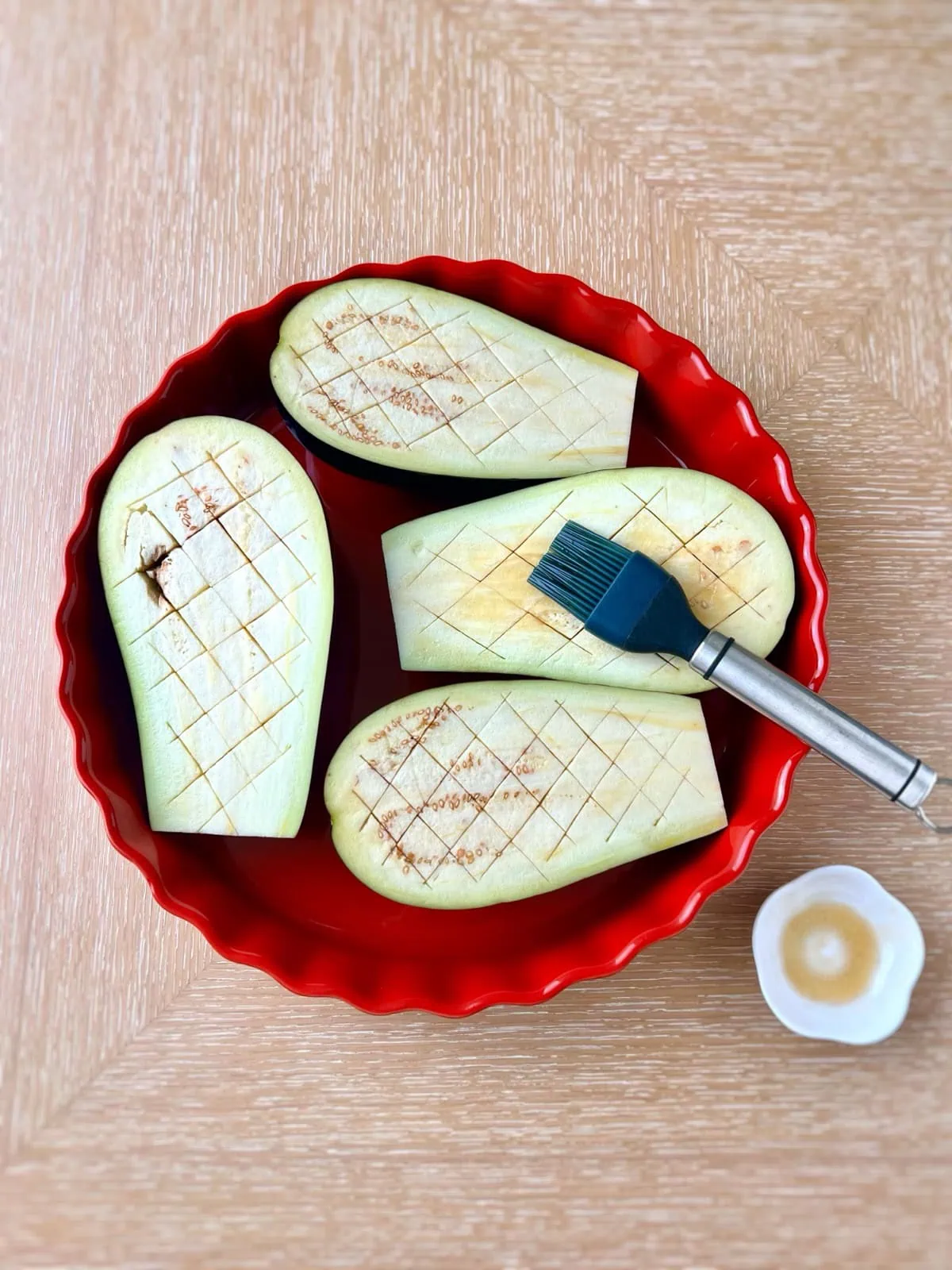
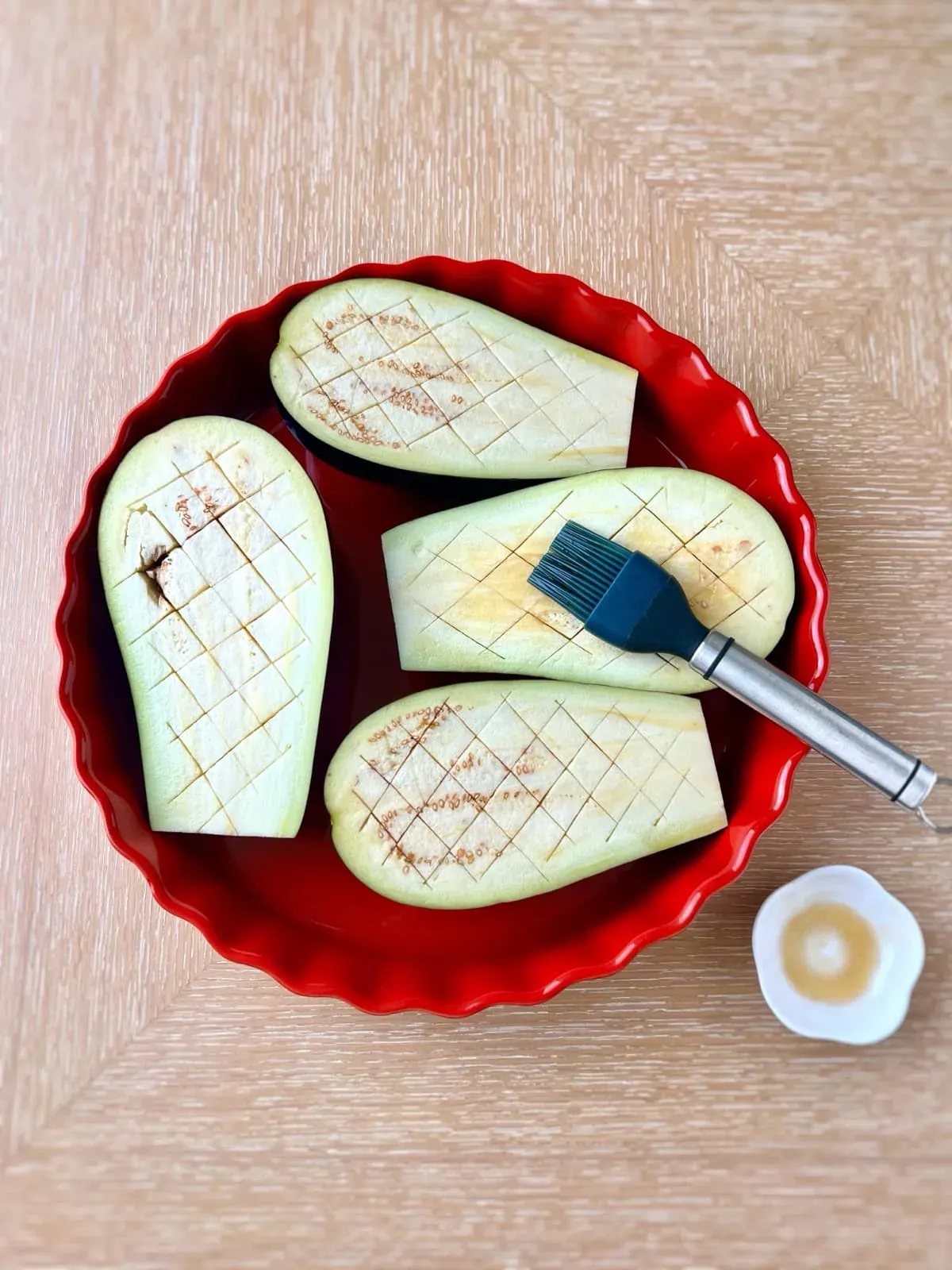
Scored eggplant in a red baking dish, brushed with oil
Brush with oil
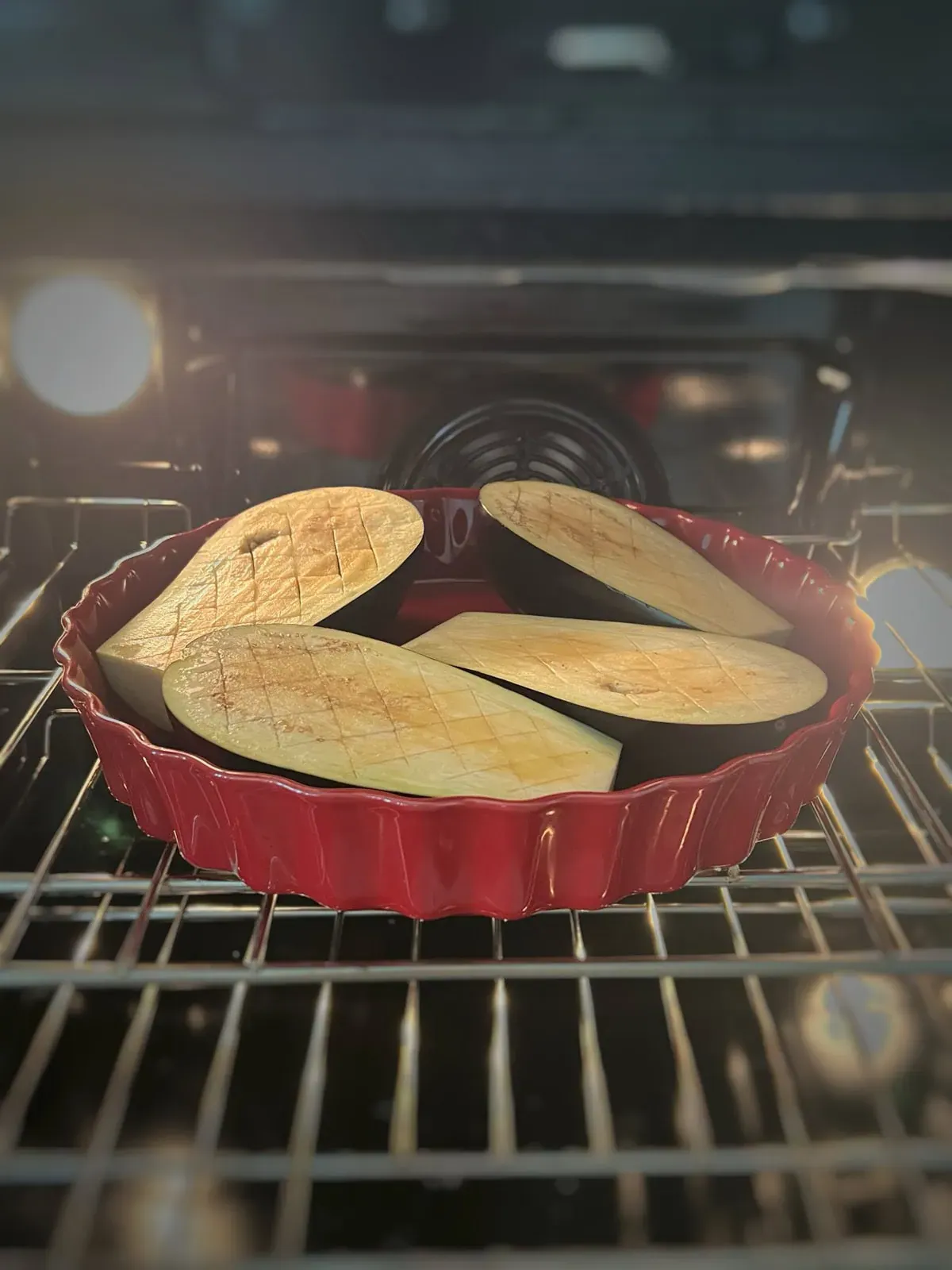
Eggplant halves in their red dish on the middle rack of the oven
Roast
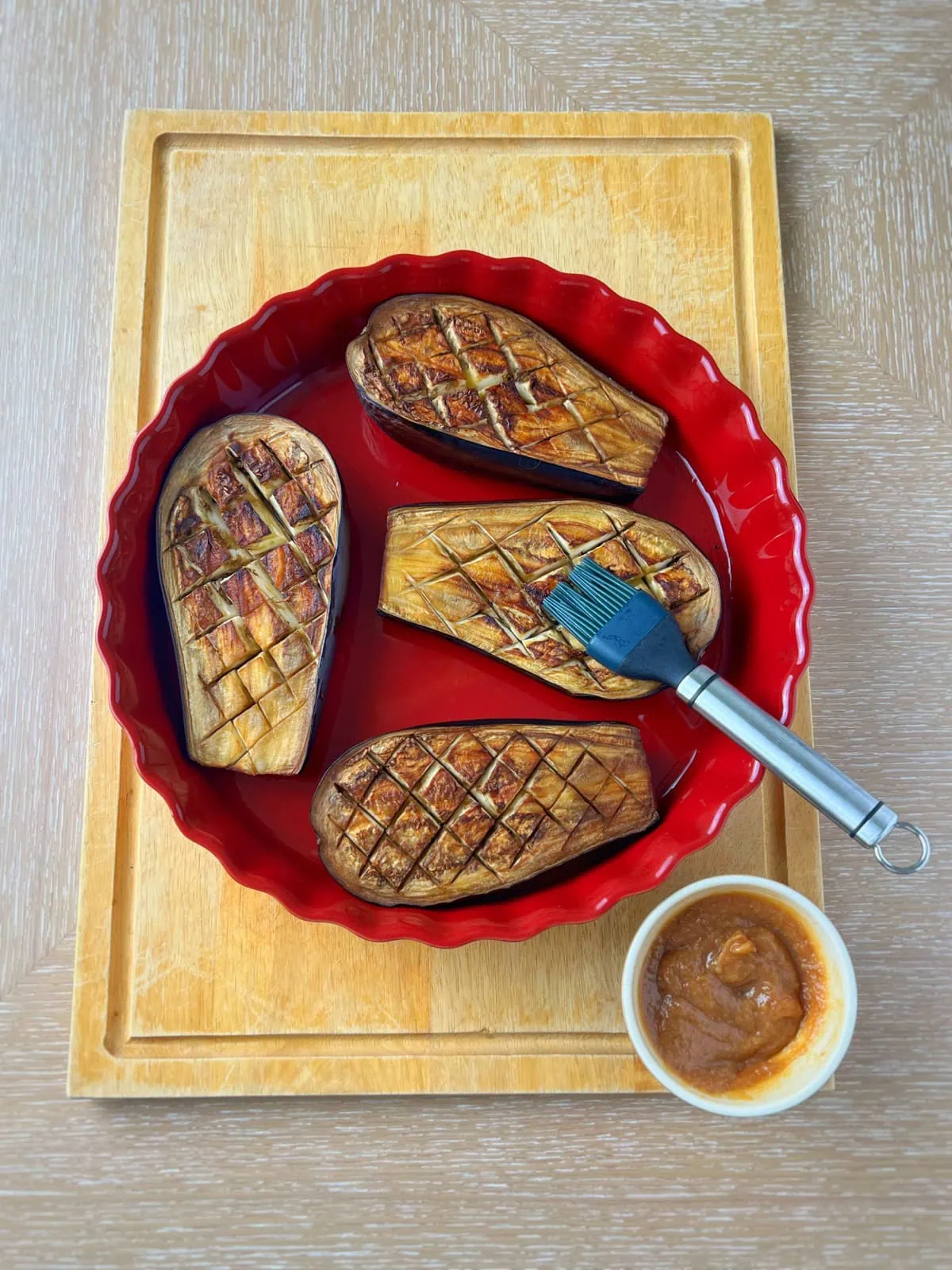
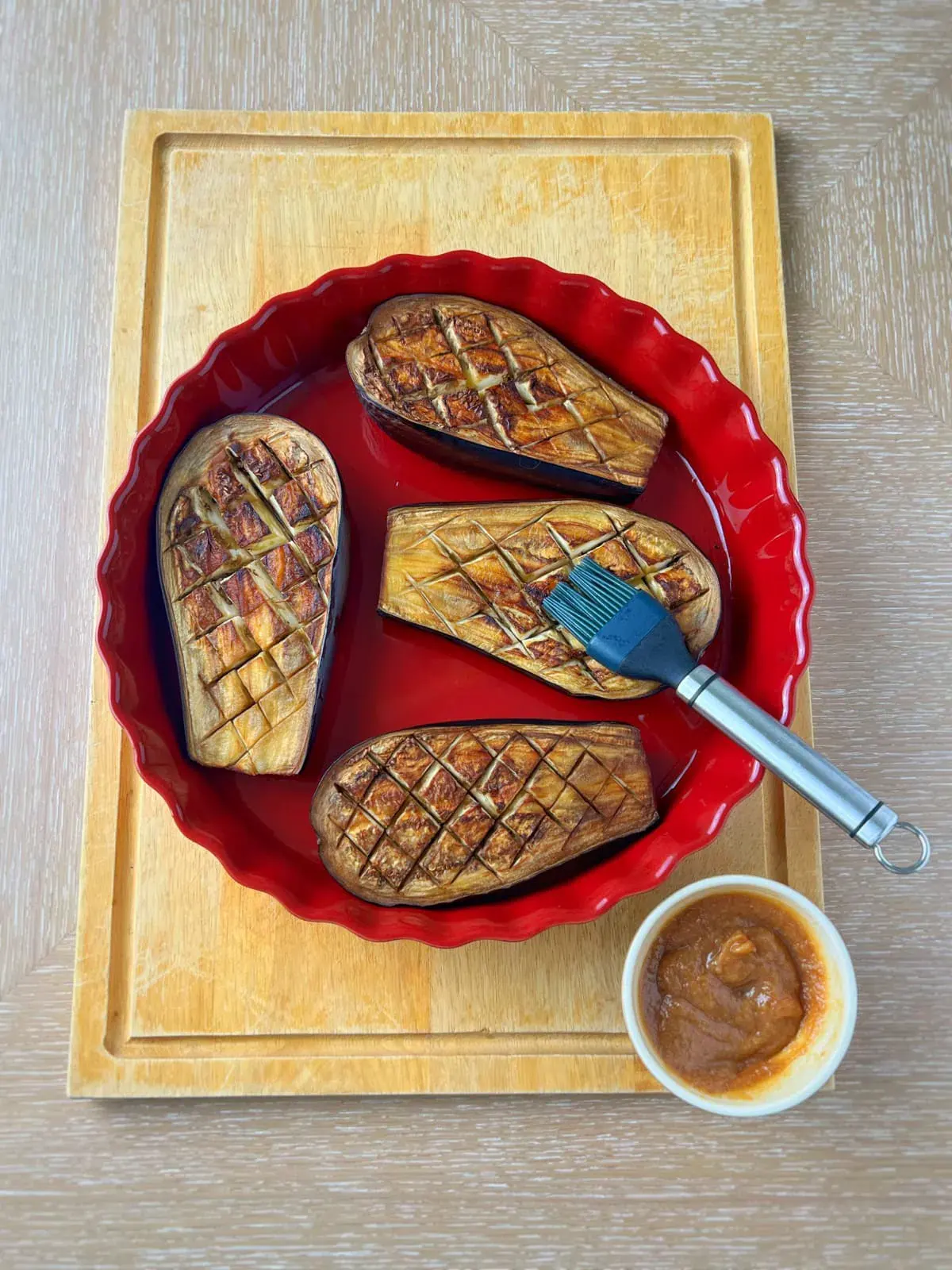
Roasted eggplant brushed with miso glaze, next to a small bowl of extra glaze
Glaze and broil
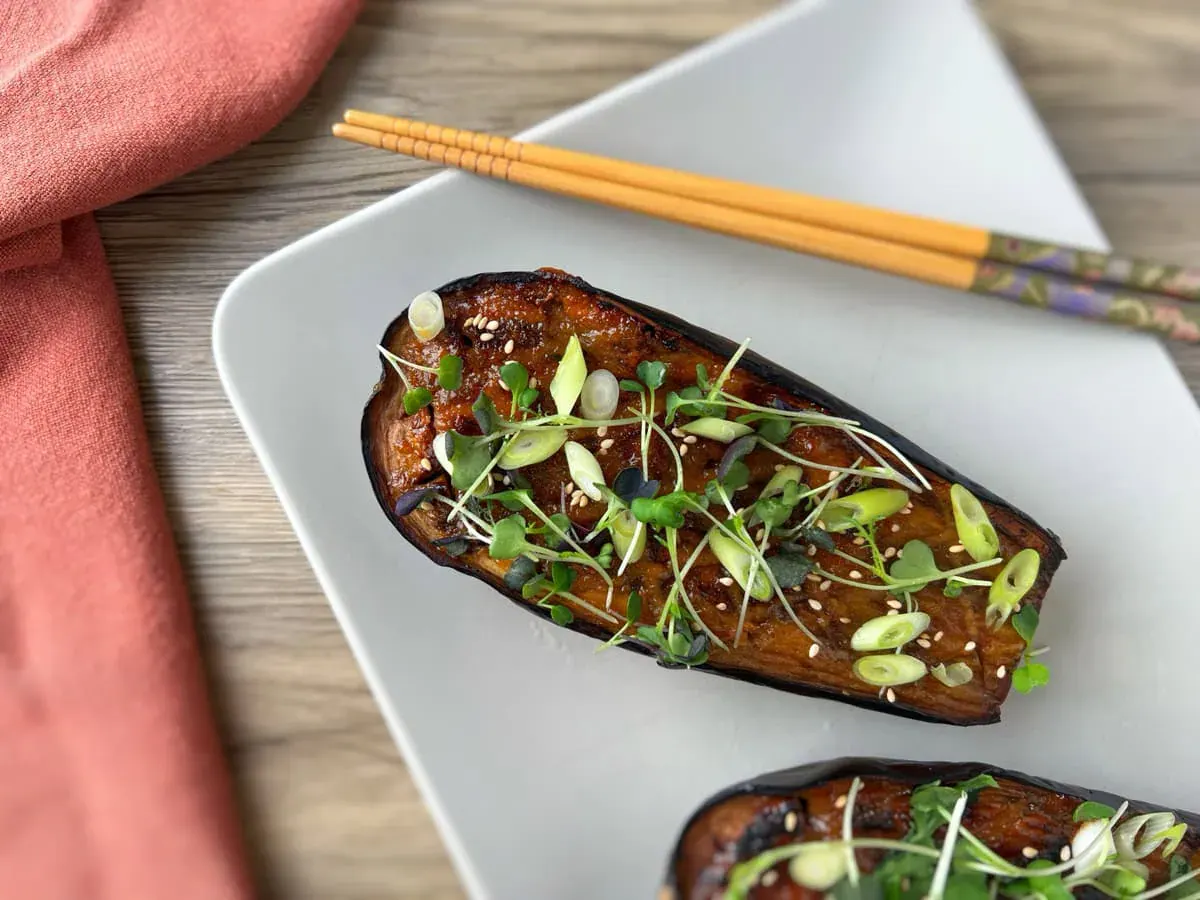
Miso glazed eggplant topped with scallions, microgreens, and sesame seeds, with chopsticks
Finish with fresh herbs

PREP TIME

10 min

COOK TIME

45 min

DIFFICULTY

Easy

STORAGE

2 days

How to Make Miso Roasted Eggplant with Very Little Oil

Cut the eggplants in half lengthwise, then score the flesh in a crosshatch pattern without cutting through the skin. These cuts let the heat reach the center and give the glaze something to cling to. Place the halves cut side up in a broiler-safe baking dish and brush them with a little olive oil or neutral oil. Toasted sesame oil adds a nutty note, but you can skip it.

Roast in a preheated 400°F (200°C) oven for about 45 minutes, anywhere from 40 to 50 depending on the size of your eggplants. In a French kitchen we’d call this eggplant confite, as in duck confit: slowly cooked in fat until silky. Same idea here, with far less oil. Start checking after 30 minutes. If the eggplant is browning too fast, lower the oven temperature or cover the dish loosely with foil, and give it more time.
To check for doneness, try this simple test: the tip of a knife should slide easily into the thickest part. If you feel resistance, keep roasting before adding the glaze. The broiler caramelizes the miso; it won’t finish cooking an eggplant that’s still firm inside.

Adding the Miso Glaze and Broiling

While the eggplants roast, stir the miso, mirin, and brown sugar together in a bowl until smooth. Your glaze is ready. The French word for it is laquage, the same one we use for lacquered duck. Once the eggplants are tender, spread the glaze over the flesh with a pastry brush or the back of a spoon, in an even layer about ⅛ inch thick (2 to 3 mm). You may not need all of it. Miso brands vary in saltiness, so taste the glaze first and go lighter if yours is on the salty side.

Position an oven rack about 6 inches below the broiler element, switch the oven to broil on high, and slide the dish in. Take it out when the glaze is bubbling and browned, before it starts to blacken. My broiler is very powerful: two minutes is plenty, and I have to stay right there. Yours may take a little longer, so keep an eye on it the whole time.

Making Miso Eggplant with Japanese Eggplants

I developed this recipe for large globe eggplants, which turn creamy and tender in the oven. Long, slender Japanese eggplants work beautifully too, and they’re a very common choice for nasu dengaku in Japan.

Use about 5 or 6, halved lengthwise, and keep everything else the same: same scoring, same oil, same glaze, same broiling. Two things change. The roasting time is shorter: they’re done in about 30 minutes at most, so start checking after 20. And since these eggplants are slimmer, spread the glaze a little thinner, about 1/16 inch (1 to 2 mm), so it doesn’t overwhelm them.

What to Serve with Miso Eggplant

Just before serving, scatter on sliced scallions, cilantro, or microgreens, plus sesame seeds if you like. The fresh toppings balance the sweet, caramelized glaze. Leave part of the surface bare so the glossy finish shows.

For a light meal, serve the eggplant with a green salad and thinly sliced cucumber, tossed in a rice vinegar dressing with no added sugar, since the glaze already brings plenty of sweetness. For something heartier, add short-grain white rice. This miso roasted eggplant also goes well with pan-seared or grilled chicken breast, or with tsukune (French only for now) if you want to keep the meal Japanese.

To drink, my French pick is a crisp Riesling, ideally from Alsace. Its bright acidity cuts right through the sweet glaze. I’d steer clear of an oaky Chardonnay here. Then again, I’ll leave the final pour up to you!

Miso Eggplant Recipe (Nasu Dengaku)

Recipe by Hélène
5.0 from 1 vote

Silky roasted eggplant with a sweet and savory miso glaze, caramelized under the broiler, made with just a brush of oil.

Course: Dinner, Side DishCuisine: JapaneseDifficulty: Easy
Servings

2

servings
Prep time

10

minutes
Cooking time

45

minutes
Cook mode

Pour garder la recette visible pendant que je cuisine

Ingredients

  • 2 large globe eggplants (about 1 pound / 450 g each)

  • 1 tablespoon olive oil

  • 1 tablespoon toasted sesame oil, optional

  • For the miso glaze
  • 3 tablespoons white miso (yellow miso works too)

  • 1½ tablespoons mirin

  • ¾ tablespoon brown sugar

  • To finish
  • scallions, thinly sliced

  • fresh cilantro

  • microgreens, optional

  • sesame seeds, optional

Instructions

  • Preheat the oven to 400°F (200°C). Wash and dry the eggplants, then cut them in half lengthwise. Score the flesh in a crosshatch pattern without cutting through the skin.Eggplant halves scored in a crosshatch pattern on a wooden board, next to a knife
  • Place the halves cut side up in a broiler-safe baking dish. Brush with the olive oil and, if using, the sesame oil.Scored eggplant in a red baking dish, brushed with oil
  • Roast for about 45 minutes, until the flesh is very tender in the thickest part and a knife slides in without resistance. Start checking after 30 minutes. If the eggplants brown too quickly, cover loosely with foil. Very large ones may need a few extra minutes.
  • While the eggplants roast, stir together the miso, mirin, and brown sugar until smooth. Slice the scallions.
  • Remove the dish from the oven. With a spoon or pastry brush, spread the glaze over the flesh in an even layer about ⅛ inch thick (2 to 3 mm). You may not need all of it, especially if your eggplants are on the small side. A thicker layer would make the dish too sweet.Roasted eggplant brushed with miso glaze, next to a small bowl of extra glaze
  • Move the oven rack about 6 inches from the broiler element and switch the oven to broil on high. Broil the eggplants, watching closely, until the glaze bubbles and starts to brown. Pull them out before the glaze blackens. This takes about 2 minutes in my oven, but yours may take longer.
  • Scatter with scallions, cilantro, and sesame seeds, if using. Serve right away.
Minute Papillote Tip

  • On busy weeknights, I roast the eggplants the day before. The next day, I just reheat them, add the glaze, and finish under the broiler.
Hélène Thiers, founder of Minute Papillote

Made It, or Tempted?

I’d love to hear what you think!
Just click the stars above to rate the recipe. It only takes a second, and it helps other home cooks find recipes they’ll love.

5.0 from 1 vote

Thank you!

Miso Eggplant: Frequently Asked Questions

Do I need sake to make miso eggplant?

Sake is a staple of Japanese cooking, but I leave it out here to keep the ingredient list short. The mirin already brings sweetness and flavor. If you have cooking sake on hand, feel free to add a splash. Reach for a cooking sake, not a bottle you’d rather save for sipping.

Mirin contains some alcohol too. Traditional hon-mirin is around 11 to 14 percent, while many supermarket mirin-style seasonings have much less, so if you need to avoid alcohol completely, check the label on your bottle.

No. Olive oil or a neutral oil works well on its own. Toasted sesame oil adds a nutty note, but the eggplant is just as good without it.

Spread the glaze in an even layer about ⅛ inch thick (2 to 3 mm). Watch very closely under the broiler and take the dish out as soon as the glaze is bubbling and browned, before it starts to blacken.

You can roast the eggplants ahead, but I recommend glazing and broiling just before serving. Store the roasted eggplants in the refrigerator for up to 2 days, and reheat them in the oven before glazing and broiling.

I don’t recommend it. I tried, and the eggplant turned watery after thawing.

White miso is what I use here. It’s mild and slightly sweet, which suits this glaze. Yellow miso works too. Red miso is generally saltier and more pungent, and it would change the balance of the recipe.

Yes, as long as you choose vegan ingredients. Check the miso label, since some varieties contain fish-based dashi. If you avoid sugar processed with bone char, check your brown sugar too, or choose one labeled vegan.

It’s vegetable-forward and made with just a brush of oil. Miso is salty, though, so keep that in mind if you watch your sodium.

More Eggplant Recipes and Japanese-Inspired Dishes

Here are a few more ideas, from appetizers to dinner.

Eggplant coconut curry in a black bowl, with cilantro, bell pepper strips, and a lime slice

Easy Coconut Eggplant Curry

Roasted eggplant simmers in a coconut milk curry for a silky texture. It reheats well, so you can make it ahead too. (In French for now, a fine excuse to practice!)

Glazed Japanese chicken meatballs served over rice, with small bowls of soy and sesame sauce

Tsukune: Japanese Chicken Meatballs

Browned in a skillet, then coated in a soy sauce and mirin glaze that thickens as it cooks. (Also in French for now.)

Terracotta bowl filled with cooked edamame in their pods, on a light wooden table

Easy Edamame Appetizer

A few minutes in salted boiling water is all it takes. Serve them in their pods and let everyone pop out the soft, slightly sweet beans.

Pale pink pickled ginger in a small glass jar

Homemade Pickled Ginger for Sushi

Thin slices of ginger pickled in a sweet rice vinegar brine, a refreshing palate cleanser between bites of sushi. Think of it as the Japanese cousin of the French trou normand, the little pause that clears your palate mid-meal.

Leave a Comment

Your email address will not be published. Required fields are marked *

*

This site uses Akismet to reduce spam. Learn how your comment data is processed.